
Compliance is the new currency in spaces we once thought immune to regulation.
Tightening venue rules are not merely bureaucratic friction but a fundamental reshaping of exotic dancing operations.
- They alter choreography, hiring practices, revenue models, and performer autonomy.
- As managers, performers, and advocates, we are navigating revised licensing, zoning, and patron-interaction policies that demand operational reinvention.
Physical and contractual changes are visible across venues.
- We witness stages redesigned for surveillance.
- Contract terms are rewritten to reflect liability shifts.
- Financial flows are rerouted to meet transparency requirements.
These changes force difficult trade-offs.
- Increased safety and legitimacy versus potential loss of income and creative freedom.
By tracking policy shifts and on-the-ground adaptations, we reveal broader labor and professional impacts.
- We show how venues reconfigure labor relations.
- We document how risk is shifted between performers, managers, and patrons.
- We explain how professionalism in the industry is being redefined.
Our exploration synthesizes regulatory analysis, operator interviews, and performer perspectives to show that compliance trends are not peripheral constraints but central forces reshaping the very logic of exotic dancing enterprises.
Regulatory Landscape Shifts
Regulatory pressure is increasing, so clubs and dancers must rethink licensing, safety, and record-keeping.
We clarify how venue regulation affects daily routines.
- Update dancer contracts to reflect clearer roles and responsibilities.
- Shift schedules to comply with inspection windows.
- Centralize documentation so required records are accessible to authorized staff and performers.
We build a team culture that protects performers and the business.
- Involve dancers in policy updates and invite questions.
- Make contract language straightforward and fair so terms are transparent and understood.
We redesign surveillance to balance regulatory demands with privacy and dignity.
- Reposition cameras to avoid private areas while meeting coverage requirements.
- Limit footage retention to the minimum time required by law.
- Post notice policies visibly so everyone knows when and where recording occurs.
We stay proactive through training and testing.
- Train staff on what inspectors look for and how to present documentation.
- Run mock audits with performers to identify gaps and build confidence.
By aligning venue regulation, dancer contracts, and surveillance design, we create a safer, more transparent space where everyone feels respected and confident that rules are being met.
Licensing and Zoning Impacts
Many municipalities now tie licensing approvals and zoning permits to specific operational conditions.
This requires adjusting hours, floor plans, and service offerings so the venue stays compliant. We’re learning to read local codes closely and collaborate with regulators so our venues remain welcome parts of their neighborhoods.
When venue regulation shifts, we review dancer contracts to align responsibilities, shift differentials, and safety protocols without leaving anyone exposed.
We’ll coordinate with legal counsel and community liaisons to translate permit language into practical policies that foster trust among staff and patrons.
- Practical items include:
- Clear signage
- Documented entry procedures
- Scheduling that respects curfews imposed by special-use permits
We’ll also track renewal timelines and appeal rights together, so compliance feels manageable, not punitive.
By embedding contract clauses that reflect zoning limits and operational conditions, we protect workers and the business alike.
Ultimately, we’re committed to adapting transparently and inclusively, so our venues remain safe, sustainable, and accepted within the communities we serve.
Stage Design and Surveillance
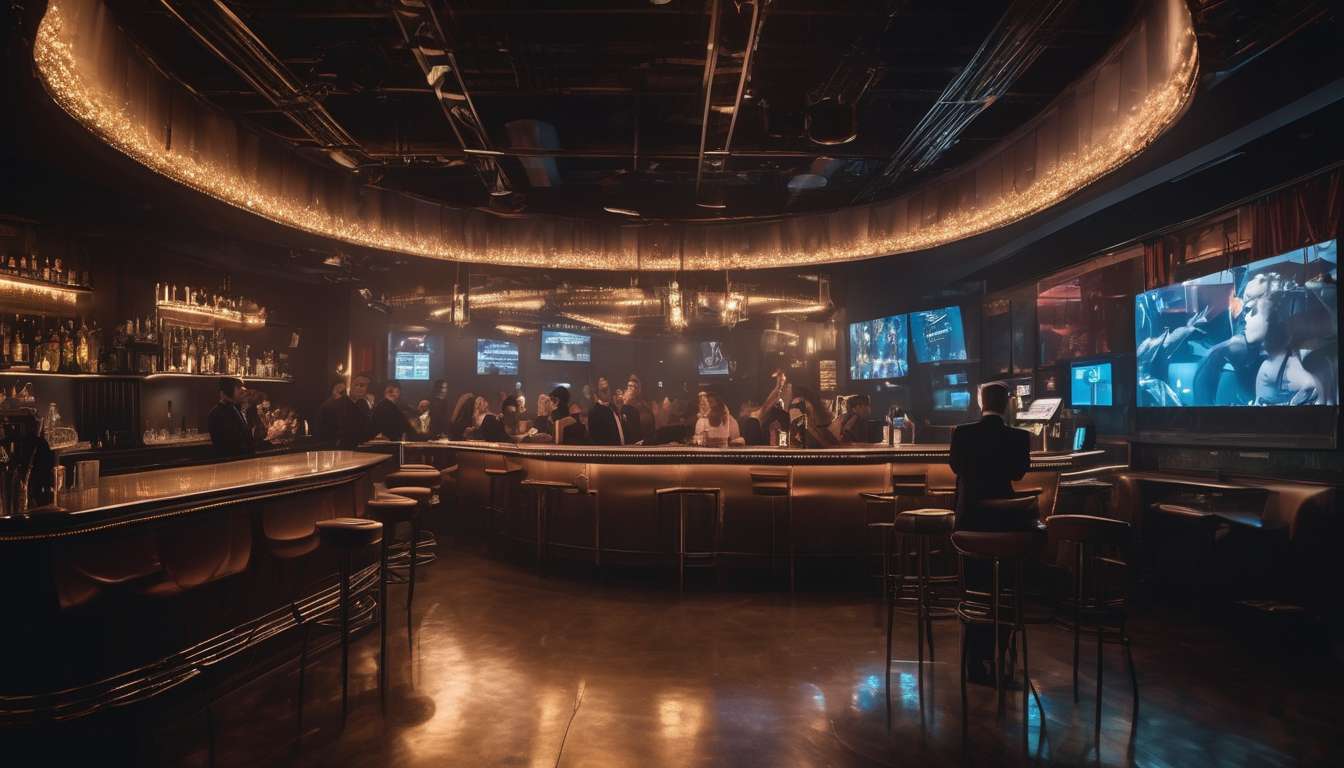
We’ll balance stage layout and camera placement to protect performers’ privacy, meet legal requirements, and maintain clear sightlines for safety and incident review.
We prioritize inclusive spaces where everyone—performers, staff, and regulars—feels respected and secure.
Together we map sightlines so cameras never capture private areas, aligning surveillance design with local venue regulation and best practices.
We place raised stages, barriers, and designated performer zones to reduce unwanted proximity without isolating artists from the crowd.
We coordinate with performers when updating floorplans and reference dancer contracts to ensure staging expectations are clear, fair, and enforceable.
We standardize signage, training, and incident protocols so staff act consistently when privacy or safety concerns arise.
We audit camera angles routinely, keep footage retention policies transparent, and document compliance steps for regulators.
By centering mutual respect in technical choices, we create environments that:
- protect rights and privacy,
- satisfy oversight and regulatory requirements,
- welcome community participation,
- remain practical and operationally compliant.
Contractual Redesigns
Goal: overhaul dancer contracts to clarify rights, payment, and safety while making agreements easier to understand and enforce.
We are aligning contracts with evolving venue regulation so performers, managers, and staff feel protected and respected.
Core clauses we draft:
- Schedules and attendance: specify show times, call times, break policies, and consequences for no-shows or late arrivals.
- Tip handling and fee splits: define how tips are collected/distributed, house fees, and any mandatory fees or taxes.
- Payment timing and methods: state when and how performers are paid, records required, and remedies for late or incomplete payment.
- Dispute resolution: set clear steps (informal resolution, mediation, arbitration or court), timeframes, and governing law.
Surveillance and privacy provisions:
- Scope of monitoring: describe what cameras record (areas covered and expressly excluded), when recording occurs, and retention limits.
- Access controls: list who can view footage, under what circumstances, and audit/logging requirements.
- Permitted uses and limitations: limit footage use to safety, compliance, and investigations; prohibit use for harassment, marketing, or nonconsensual distribution.
- Consent and notice: require performer notification of surveillance and obtain consent where required by law.
Risk allocation and protections:
- Indemnities and liability: standardize who bears what risks (injury, property damage, third-party claims) and reasonable caps on liability where appropriate.
- Confidentiality: protect private information (personnel records, medical info, investigation details) and limit disclosure.
- Termination rights: set cause and convenience termination rules, notice periods, final pay, and return of property.
Contract tone and maintenance:
- Plain-language drafting: use clear, non-legalistic language to improve comprehension and enforceability.
- Mutual obligations: balance duties between venue and performers to build trust rather than hierarchy.
- Routine review windows: include scheduled contract reviews or amendment triggers tied to regulatory changes.
Outcome: standardized, fair agreements that preserve dignity and operational stability while allowing rapid updates as venue rules evolve.
Labor Relations Reconfiguration
We will reorganize workplace roles, union engagement, and grievance processes to ensure fair bargaining power, consistent enforcement of policies, and clearer pathways for worker voice.
– Create collaborative committees that include dancers, managers, and legal advisors so venue regulation becomes a shared framework rather than a top-down mandate.
– Renegotiate dancer contracts with transparent terms on shift scheduling, tip handling, and protections against retaliatory actions, reinforcing that everyone belongs to the same professional community.
We will standardize grievance procedures with timely, confidential reporting channels and neutral mediators so concerns are resolved respectfully and predictably.
– Establish clear, accessible reporting channels with defined timelines for acknowledgement and resolution.
– Use neutral mediators for disputed cases and allow worker representation throughout the process.
We will involve workers in surveillance design decisions to balance safety and privacy.
– Specify camera locations, data retention limits, and access controls.
– Require worker input and written policies explaining the purpose, scope, and safeguards for surveillance.
We will train supervisors to apply rules consistently and recognize power imbalances.
– Provide ongoing training on equitable enforcement, anti-retaliation, and de-escalation techniques.
– Implement periodic reviews where staff can propose contract amendments and policy changes.
By taking these steps, we will build trust, reduce conflict, and ensure that labor relations reflect dignity, mutual accountability, and shared ownership of the venue’s compliance trajectory.
Financial Transparency Measures
We will implement clear, regular financial reporting and open-book practices so dancers, managers, and stakeholders can verify earnings, fees, and venue expenses.
We will publish standardized monthly statements that break down:
- tips
- stage fees
- house charges
- any third-party commissions
These statements will align with evolving venue regulation expectations.
We will negotiate dancer contracts that specify pay calculations, deductions, dispute resolution, and access to records, so everyone feels respected and included.
We will set protocols for audit access and anonymized payroll summaries when needed to protect privacy while maintaining accountability.
Where surveillance design intersects with finance — such as camera logs tied to shift times — we will document retention policies and ensure footage use does not affect pay determinations without transparent review.
We will offer regular financial briefings and accessible summaries so crew and performers can:
- ask questions
- propose changes
- co-create fair practices
By centering openness in accounting and contract terms, we will build a trusting, collective environment that meets compliance demands and supports shared prosperity.
Safety Versus Income Trade-offs
Many performers and managers weigh safety measures against potential income losses.
We’ll assess how policies like private-room bans, security staffing, and tip-sharing rules affect both well-being and pay.
We’re part of teams negotiating venue regulation that aims to protect us without undermining livelihoods.
Private-room restrictions
- Private-room bans can reduce isolated-risk situations.
- They can also reduce solo tips and change shift dynamics, affecting overall earnings.
Clear dancer contracts
- Contracts that specify responsibilities, fee structures, and grievance processes help performers feel secure and treated fairly.
- They give managers a predictable framework to budget for added safety measures.
Thoughtful surveillance design
- Cameras placed in public areas and transparent recording policies can deter aggression while preserving dignity.
- Transparency about who can access footage and retention policies is essential.
Staffing choices
- Trained security raises collective confidence and improves immediate safety.
- Venues must offset costs without unfairly passing fees onto dancers.
Collaborative policy-making
- Include performers and managers in negotiations so policy trade-offs are understood.
- Balance safety upgrades with income considerations to avoid undermining livelihoods.
- Build trust and mutual respect to ensure policies are workable and sustainable.
Professionalization of Performance
We’re seeing more performers adopt standardized routines, professional training, and branding strategies to boost earnings, safety, and long-term career options.
By treating performance as a craft, we create peer-supported pathways to higher pay and clearer boundaries.
We’re organizing workshops, sharing choreography templates, and cultivating stage personas that fit venue expectations while preserving individual creativity.
We’re negotiating clearer dancer contracts to formalize schedules, pay splits, and dispute resolution, which helps everyone feel protected and valued.
When venues update regulatory compliance, we collaborate to adapt acts without sacrificing identity.
We openly discuss how surveillance design impacts comfort and consent, pushing for camera placement and policies that balance security with dignity.
Together, we form networks that:
- mentor newcomers
- exchange best practices
- advocate for fair enforcement
This collective approach strengthens our community, reduces isolation, and positions performance as a sustainable profession rather than a precarious gig.
How do changes in venue compliance affect the personal legal liability of individual dancers outside of workplace incidents?
Topic: How venue compliance changes affect dancers’ personal legal liability outside workplace incidents
Main idea — stricter venue compliance reduces individual liability.
When venues adopt clearer, stricter rules (policies on conduct, boundaries, and consent), improve recordkeeping, and implement security measures, dancers’ personal exposure to legal risk tends to decrease because responsibilities and expectations are defined and incidents are better documented.
Main idea — looser compliance shifts responsibility to performers.
If venues relax policies, cut back on security, or fail to keep reliable records, more legal responsibility can fall on individual dancers, who may be forced to rely on their own documentation, witnesses, or legal defenses if an incident occurs outside the immediate workplace context.
Practical steps every dancer should follow to reduce personal liability.
-
Know local laws and ordinances.
- Understand criminal and civil standards in your jurisdiction (assault, harassment, indecent exposure, consent laws, licensing rules).
- Learn any venue-specific regulations that could affect post-shift incidents (e.g., curfew or private-venue liability rules).
-
Keep clear documentation.
- Log dates, times, descriptions, and witnesses for any incidents or unusual interactions.
- Save digital evidence (messages, photos, receipts) and note venue staff responses.
-
Maintain and follow shared safety practices.
- Use buddy systems, check-ins, call-outs, and de-escalation training agreed upon by performers.
- Agree on boundaries and standard responses to common situations so everyone’s actions are consistent and defensible.
-
Engage collectively for legal guidance.
- Seek group consultations with a lawyer or legal clinic to get consistent advice and create shared protocols.
- Collective agreements or policies (even informal) can show proactive steps taken by performers to reduce risk.
-
Report and escalate appropriately.
- Report incidents to venue management and, when appropriate, to law enforcement.
- Follow up in writing so there is a paper trail demonstrating you raised concerns.
Why these steps matter outside workplace incidents.
- Clear policies and documentation can establish that responsibility lay with the venue or third parties, not the performer.
- Consistent shared practices and legal advice reduce inconsistencies in individual actions that might be used against a dancer in civil or criminal proceedings.
- Collective measures make it harder for venues or outsiders to shift blame onto individual performers.
Bottom line:
Stricter venue compliance generally protects dancers by clarifying responsibilities and creating evidence trails. When compliance weakens, dancers should compensate by knowing local law, documenting interactions, following shared safety protocols, and seeking collective legal guidance to minimize personal liability beyond immediate workplace incidents.
What are common insurance options available specifically for exotic dancers to protect against non-workplace claims (e.g., defamation, stalking, personal property loss)?
Personal umbrella policies
Personal umbrella policies provide additional liability coverage above the limits of your auto and homeowners/renters policies. They can protect you against large liability judgments that arise from non-workplace incidents (e.g., a guest injured at your home).
Renters or homeowners insurance for property loss
- Covers personal property such as costumes, electronics, and instruments against theft, fire, and certain other perils.
- May include loss of use (additional living expenses) if your residence is uninhabitable after a covered loss.
Check for limits and special endorsements for high-value items.
Identity theft coverage
Identity theft plans reimburse certain costs and provide restoration services if your identity is compromised. Useful for protecting financial identity and credit after data breaches or targeted theft.
Cyberbullying and defamation add‑ons
- Many standard personal policies don’t cover online harassment, defamatory statements, or reputational harm.
- Look for endorsements or standalone media liability / personal cyber coverage that covers cyberbullying, online defamation, and related crisis-management expenses.
Stalking-related legal expense insurance
Some insurers offer legal expense coverage tied to stalking or harassment incidents, paying for restraining orders, legal counsel, or safety-related expenses. This can be critical for performers facing targeted threats.
Standalone legal expense policies
Standalone legal expense or legal protection policies cover civil legal costs (e.g., defending a lawsuit, contract disputes, pursuing harassment claims). They can fill gaps not covered by other liability policies.
Specialized entertainer liability plans
- Some insurers and brokers provide policies tailored to performers and entertainers that bundle relevant protections (property, liability, media/cyber, equipment coverage).
- These can be more comprehensive for performer-specific risks than off-the-shelf personal lines.
Compare carriers and consider trade organizations for group-rate coverage
- Compare quotes, coverages, limits, and exclusions across multiple insurers and brokers.
- Joining trade associations or unions may provide access to group-rate policies or endorsed plans with better terms for dancers and performers.
If you’d like, I can:
- Compare typical coverages and price ranges for these options.
- Draft a checklist of questions to ask insurers when shopping.
- Find trade associations or specialist brokers for performers in your region.
How can performers discreetly document workplace violations or unsafe conditions without risking breach of venue confidentiality clauses?
We want to discreetly document violations without breaking venue confidentiality.
Use secure tools:
- Personal phones on airplane mode
- Encrypted apps
- Timestamped notes stored off-site
Avoid recording coworkers without consent.
Focus on written incident logs:
- Include witness names
- Record objective details
Consult trusted peers or legal aid before sharing.
Keep copies with a safe third party so you’re protected if confidentiality clauses are later enforced.
Conclusion
You’ve seen how shifting regulations are changing exotic dancing venues — from licenses and zoning to stage layout, contracts, and labor relations.
You’ll need to balance safety, surveillance, and financial transparency without undercutting performer income.
Embrace professionalization to protect workers and sustain operations, redesigning spaces and agreements to meet new standards.
If you adapt proactively, you’ll preserve artistic expression while complying with evolving rules and maintaining a viable, safer business model.