
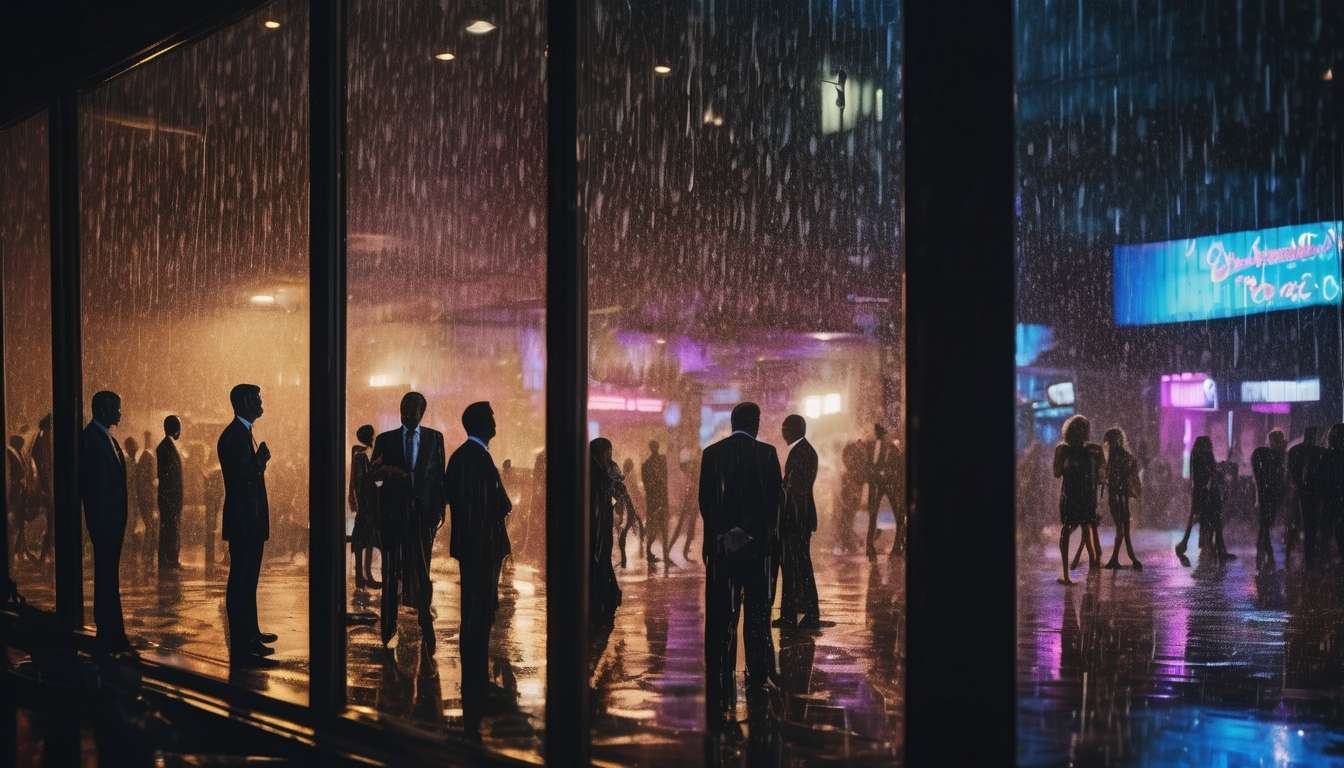
Here, in a meeting room usually reserved for zoning debates and transit planning, we found ourselves discussing neon-lit stages alongside public safety reports.
We had not expected exotic dancing venues to intersect so clearly with issues we routinely tackle — licensing, neighborhood character, employment rights, and urban design — yet the link is undeniable.
As planners, council members, and residents, we are tasked with balancing economic opportunity and community standards while addressing health, safety, and equity for workers and neighbors alike.
Our conversations reveal how nightlife economies shape:
- foot traffic,
- lighting and surveillance decisions,
- property values, and
- social cohesion.
Recognizing these venues as part of the urban ecosystem forces us to rethink assumptions and welcome diverse stakeholder voices.
By approaching the subject pragmatically and respectfully, we can craft policies that:
- protect vulnerable workers,
- respect local contexts, and
- integrate adult entertainment into broader strategies for vibrant, safe, and inclusive cities.
Policy Context
We’re examining how local zoning, licensing, and public safety regulations shape where and how exotic dancing venues can operate.
Zoning rules determine not just physical location but also community relationships and economic opportunity.
- They should balance neighborhood character with economic opportunity for venues.
- Poorly designed zoning can isolate venues and staff, while thoughtful zoning can integrate them as legitimate local businesses.
We push for licensing systems that are transparent, fair, and free from arbitrary barriers.
- Licensing should be straightforward and consistent.
- Systems must avoid requirements that function as de facto exclusionary tools.
Worker protections must be enforceable and accessible.
- Protections include enforceable labor standards, clear complaint processes, and access to health and safety resources.
- These measures let performers work with dignity, safety, and predictability.
Regulatory design shapes whether venues and staff are marginalized or normalized.
- Thoughtful regulation can create predictable, respectful operating conditions.
- Poorly designed regulation can produce arbitrary enforcement and unstable work environments.
We advocate for collaborative policymaking that includes policymakers, venue owners, and performers.
- Engage all stakeholders together to ensure policies reflect shared values.
- Promote consistent enforcement, straightforward licensing, and worker protections.
- Aim for policies that support both community standards and the safety and inclusion of workers.
Overall goal: create regulatory frameworks that treat exotic dancing venues as legitimate businesses while ensuring performers’ safety, dignity, and access to recourse.
Zoning Considerations
We should map where venues can locate so they fit community plans, minimize conflicts with sensitive uses, and support safe, accessible work environments.
We’ll use zoning to balance neighborhood character and economic opportunity, creating clear, predictable rules that let operators and neighbors plan together.
We want spaces where performers and staff feel included and safe, so zoning must be coordinated with worker protections rather than isolated from them.
We’ll zone in ways that avoid arbitrary exclusion—setting objective distance requirements from schools and childcare while allowing venues in commercially appropriate corridors.
We’ll design standards for hours, signage, and parking that reduce nuisance complaints without pushing activity underground.
We’ll engage residents, workers, and business owners in mapping decisions so everyone’s voice shapes outcomes.
By aligning zoning maps with social safety nets and transparent licensing processes, we’ll foster belonging, reduce stigma, and ensure venues operate responsibly.
Thoughtful zoning makes room for dignity, economic contribution, and public safety all at once.
Licensing Frameworks
We’ll create clear, fair permit systems that set operational standards, streamline inspections, and ensure accountability without criminalizing workers.
We’ll design licensing procedures that are transparent, affordable, and predictable so venue operators and staff feel respected and included.
By linking licensing to zoning rules, we’ll reduce conflicts with neighborhoods and provide a shared roadmap for where venues can operate.
We’ll simplify application steps, set reasonable renewal timelines, and publish checklists so community members and businesses know what to expect.
We’ll require basic safety and recordkeeping standards while avoiding intrusive practices that isolate performers.
We’ll use licensing to promote consistent municipal oversight, enable targeted training opportunities, and facilitate dialogue between operators, residents, and regulators.
We’ll monitor impacts, collect data, and adjust fees or requirements to prevent barriers to entry.
We’ll foster a policy environment where licensing balances public safety, neighborhood concerns, and inclusion, and where everyone—workers, owners, and neighbors—has a voice in shaping rules.
Worker Protections
We will ensure performers and staff have clear rights to workplace safety, fair pay, and access to confidential reporting and support services.
We will create consistent worker protections that respect dignity, reduce stigma, and make venues places where everyone can belong.
We will align these protections with zoning and licensing rules so compliance promotes labor rights rather than penalizes workers.
We will require transparent contracts, timely wage payments, tip protections, and predictable schedules.
We will provide accessible channels for confidential complaints and mediation.
We will fund training for managers and staff on respectful workplace norms and on recognizing exploitation.
We will support peer-led outreach so workers shape policy.
We will coordinate with licensing authorities to ensure permits aren’t used to retaliate against workers who report abuses.
We will review zoning policies to prevent displacement that undermines stable employment.
We will track outcomes with clear metrics and involve venue workers in ongoing evaluation.
Durable worker protections depend on our shared commitment and the trust of the people they serve.
Public Safety Measures
We’ll prioritize evidence-based public safety measures that protect patrons, performers, and staff without criminalizing or stigmatizing the venues themselves.
We’ll work together to create consistent licensing standards that set clear safety expectations—lighting, emergency exits, and trained security—while respecting workers’ rights.
We’ll align zoning decisions with safety planning so clubs are sited responsibly, but we won’t use zoning as a tool to push venues underground or erode worker protections.
We’ll support regular, collaborative safety audits conducted with staff and performers present, so policies reflect lived experience and build trust.
We’ll fund accessible training on de-escalation, first aid, and incident reporting, and ensure licensing processes don’t punish those who report problems.
We’ll establish transparent complaint mechanisms and data-sharing with public health and emergency services, emphasizing prevention over punishment.
We’ll center the voices of performers and staff in rulemaking, because shared responsibility and mutual respect produce safer spaces for everyone who wants to belong in our city.
Neighborhood Impacts
Purpose and approach.
We’ll assess how exotic dancing venues affect nearby residents, businesses, and public spaces and plan mitigation strategies that balance neighborhood quality of life with venue viability.
We’ll listen to neighbors and venue staff so everyone feels included in solutions.
Key concerns to address.
- Noise
- Lighting
- Late-night foot traffic
- Litter
Zoning and location strategy.
We’ll propose clear zoning rules that place venues where impacts can be managed without isolating them.
The goal is predictable rules that manage externalities while allowing venues to operate.
Licensing and process transparency.
We’ll support licensing processes that are transparent and consistent, reducing neighborhood friction and arbitrary outcomes.
Transparent licensing builds trust between residents, businesses, and regulators.
Worker protections and safety.
We’ll promote worker protections, including:
- Safety plans.
- Avenues to report harassment.
- Access to health and mediation resources.
These measures help staff work without fear and help neighbors feel secure.
Shared stewardship and community relations.
We’ll encourage coordinated cleaning, respectful signage, and community liaisons who bridge venues and residents.
A liaison and joint stewardship reduce conflicts and improve daily neighborhood life.
Overall principle.
By prioritizing predictable rules and mutual respect, we’ll help neighborhoods retain character while ensuring venues operate responsibly, fostering belonging and trust across the community.
Economic Contributions
We’ll examine how exotic dancing venues contribute to local economies through job creation, tax revenue, and the stimulation of nearby businesses.
We create and sustain employment — not only for performers but for bartenders, security, cleaning staff, and managers. This diversity of roles provides varied wage opportunities that benefit neighborhoods and reduce local unemployment.
We generate taxable sales and payroll taxes that support public services many residents rely on, making these venues a source of direct municipal revenue.
Thoughtful zoning and clear licensing help integrate venues into communities without displacing existing residents or businesses. Predictable rules for operators protect community standards while minimizing conflict.
Economic contribution is about people feeling they belong in local markets. That’s why we advocate for worker protections that ensure:
- fair pay,
- safe shifts,
- access to benefits.
When venues operate transparently under licensing and zoning guidelines and promote worker protections, they can be stable economic partners.
- They support nearby restaurants, rideshares, and retail.
- They do so while respecting the broader urban fabric and community needs.
Community Engagement
We engage neighbors, local businesses, and city officials to build transparent, ongoing dialogue that balances venue operations with community needs.
We create regular forums where residents can voice concerns and where operators explain:
- how zoning affects location choices,
- how licensing works, and
- what worker protections are in place.
We listen for shared priorities — safety, respect, and economic vitality — and we make sure meetings are accessible, with:
- clear agendas, and
- follow-up notes.
We collaborate on practical solutions:
- Adjusting hours.
- Improving lighting and transit access.
- Establishing joint complaint procedures that respect privacy and due process.
We push for licensing that’s fair and non-stigmatizing, and for worker protections that include reporting mechanisms and health supports.
We treat operators, staff, and neighbors as partners, not adversaries, because durable policy emerges from mutual trust.
Together, we shape rules that reflect community values while protecting rights and livelihoods, reinforcing a sense of belonging and mutual responsibility.
How do personal preferences or moral objections from individual city council members influence permit decisions for exotic dancing venues?
Personal preferences and moral objections of individual council members can influence permit decisions in several ways.
They may sway votes. Individual beliefs can affect how a council member votes, especially on controversial permits. This can change outcomes when votes are close.
They can lead to stricter local rules. Council members who oppose certain activities may sponsor or support ordinances that raise regulatory burdens, making permits harder to obtain for targeted types of businesses.
They can push for zoning or land-use changes that effectively limit certain businesses. Rezoning or special-use restrictions can be used to confine where—or whether—specific businesses can operate, which can functionally exclude them without an explicit ban.
To promote fairness, adopt clear procedural safeguards:
- Evidence-based criteria. Establish and use objective standards for permit decisions (e.g., safety, environmental impact, traffic studies) rather than subjective moral judgments.
- Public input. Require transparent public hearings and notice so community views and factual information are considered.
- Recusal when bias exists. Require members to recuse themselves if they have a conflict of interest or clear bias that prevents impartial decision-making.
- Appeals and review. Provide meaningful administrative or judicial review so affected parties can challenge decisions that appear driven by personal bias.
- Consistent application. Enforce regulations uniformly to avoid selective targeting of particular businesses or viewpoints.
The overall goal is to balance community values with equal treatment under the law. This means respecting legitimate local concerns while ensuring decisions are transparent, inclusive, and grounded in objective criteria so that personal moral views do not translate into arbitrary or discriminatory treatment.
Are there specific tax incentives or breaks available to exotic dancing venues similar to those offered to other nightlife businesses?
We’ve seen tax incentives vary by city and state.
Generally, we’ll qualify for the same business tax breaks as other nightlife venues, including:
- Deductions for payroll, utilities, rent, and equipment.
- Small business tax credits.
We shouldn’t expect industry‑specific subsidies tied to tourism or revitalization unless a locality explicitly includes adult venues in those programs.
We’ll need good accounting and local legal counsel to:
- Claim available credits properly.
- Avoid exclusions related to zoning or reputation that could disqualify us.
What recourse do dancers or staff have if a venue misclassifies them as independent contractors despite local laws requiring employee status?
Review local law and gather evidence.
- We’d first review the local law and collect pay records, schedules, messages, and any evidence showing employer control.
Raise the issue with management.
- We’d raise the issue with management and request correct classification and back pay.
File a formal complaint if management doesn’t act.
- If that fails, we’d file a wage claim with the labor department.
Seek legal advice and consider collective action.
- We’d consult a workers’ rights attorney or legal aid, and consider a class action if others are affected.
Contact unions and support organizations.
- We’d also contact our union or support organizations for guidance.
Conclusion
You’ve seen how zoning, licensing and safety rules shape exotic dancing venues.
Balance business interests with neighborhood quality.
- Protect workers through clear labor standards and health measures.
- Enforce sensible licensing and public-safety practices.
Engage residents and dancers in genuine dialogue.
- Ensure decisions reflect local needs and economic realities.
Use transparent, fair frameworks.
- Preserve community character.
- Support livelihoods.
- Reduce harm without shutting down viable businesses.